/ From: / Review:11
Optical transceivers are divided into two major categories: data communication transceivers and PON transceivers. Data communication transceivers are widely deployed in enterprise networks, data centers and communication base stations, while PON transceivers are exclusively applied in passive optical access networks.
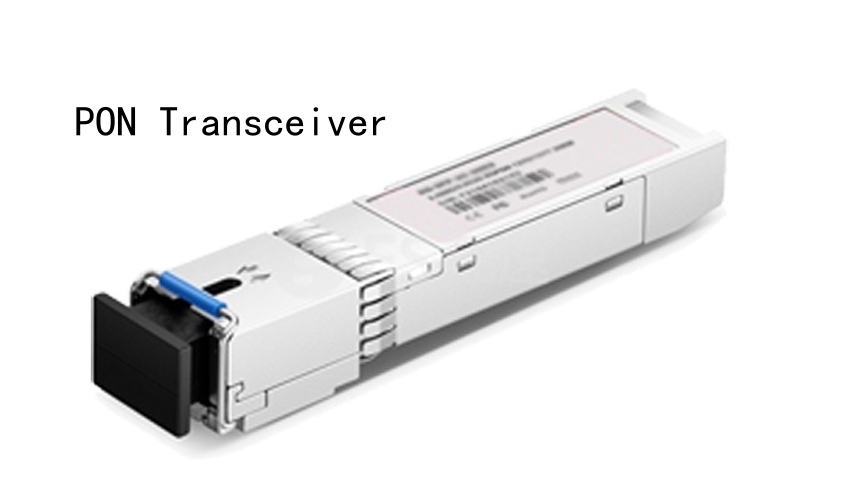
A PON transceiver is a high-performance optical device dedicated for PON systems. Complying with ITU-T G.984.2 standards and Multi-Source Agreement (MSA) specifications, it adopts wavelength division multiplexing to implement bidirectional signal transmission between OLT (Optical Line Terminal) and ONT (Optical Network Terminal) via independent uplink and downlink wavelengths.
According to different protocol specifications, PON transceivers are classified into four generations: APON (ATM PON), BPON (Broadband PON), EPON (Ethernet PON) and GPON (Gigabit-capable PON). Among them, EPON and GPON transceivers are the mainstream solutions for current network deployment.
Characteristics of PON Transceivers
PON transceivers feature fixed transmission distances of 10 km and 20 km. Different from conventional data transceivers that require paired usage at both ends, PON transceivers support single-ended operation to adapt to the point-to-multipoint topology of PON networks. They are typically fitted with SC interfaces and support Gigabit and 10G transmission rates. As indispensable core components of FTTH systems, PON transceivers are widely utilized in optical access network infrastructure.